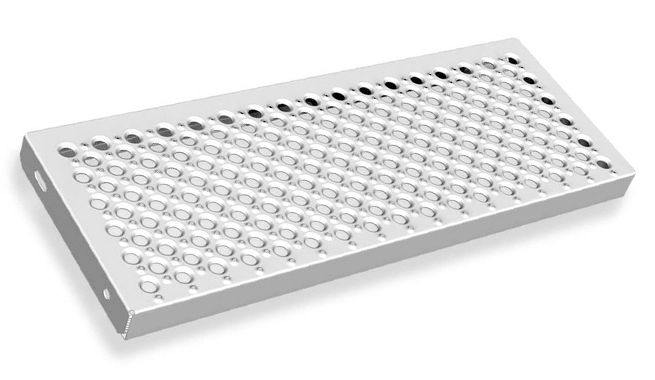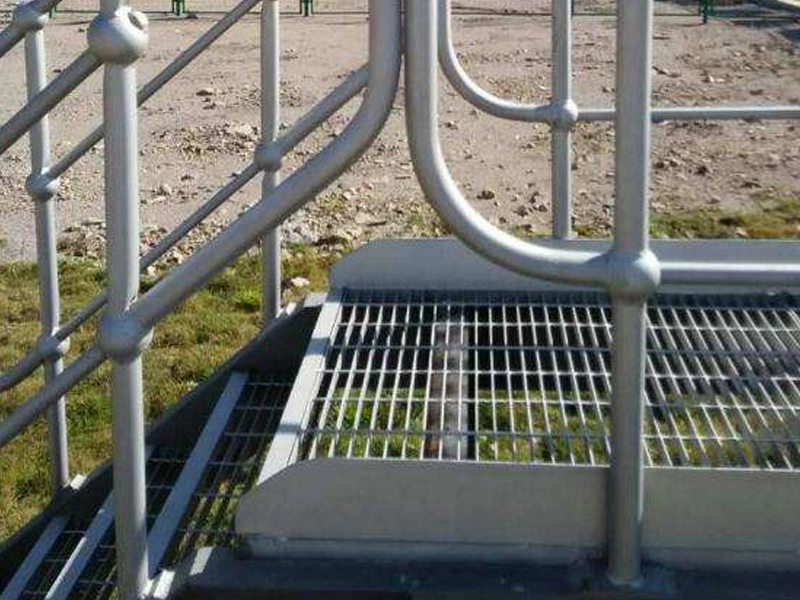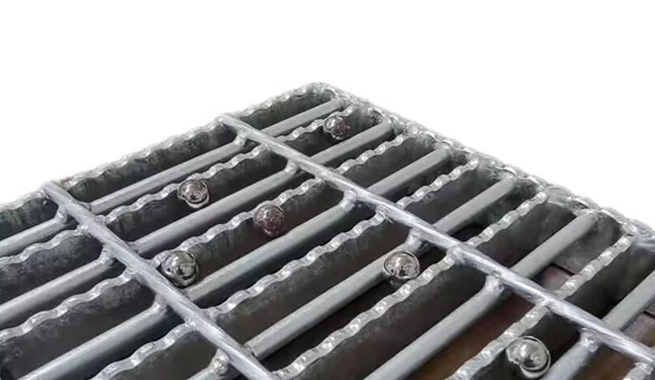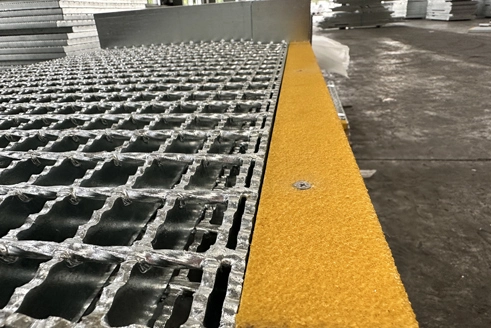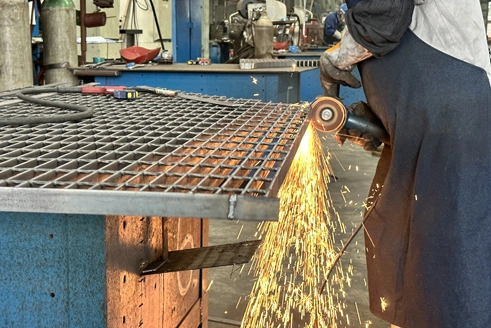
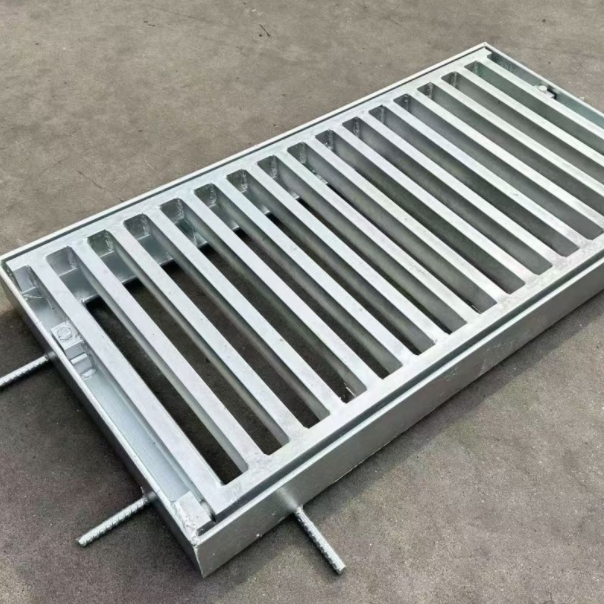
During the production process of stainless steel grating, surface treatment is a very critical step.
Principle: In the electrolyte, the microscopic raised areas on the metal surface are dissolved first by applying an external current, thus achieving a smooth and bright effect.
Advantages: The surface is more uniform and flat, effectively removing microscopic cracks and improving corrosion resistance.
Suitable for: Steel grating projects with high-end requirements, such as food, pharmaceutical, and chemical industries.
Cost: High equipment investment, but the best results, offering superior cost-effectiveness in the long run.
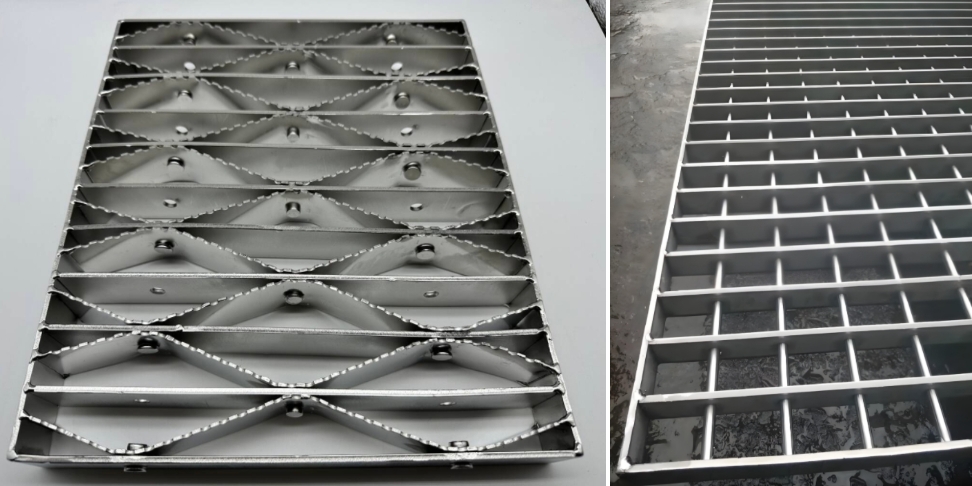
Principle: Through the corrosive action of chemical solutions, the microscopic raised parts of the surface are dissolved first, achieving a certain degree of brightness.
Advantages: Simple operation, no power supply required, suitable for steel grating processing with complex shapes and large batches.
Suitable for: General drainage platforms, walkways, and ordinary industrial platforms.
Cost: Low initial investment, but surface brightness and durability are slightly inferior to electropolishing.
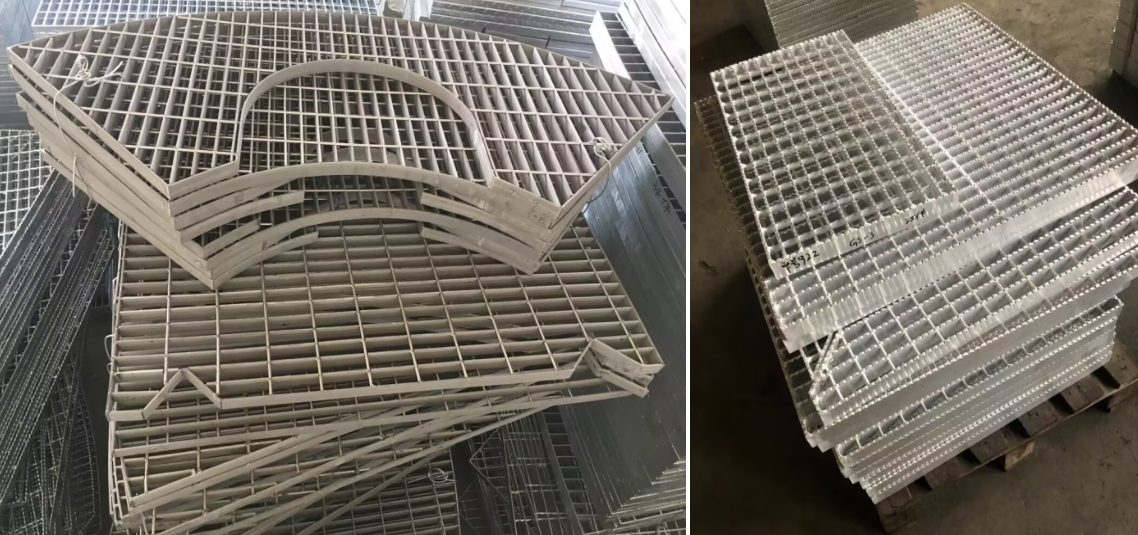
If you have high requirements for corrosion resistance and surface precision, it is recommended to prioritize electropolishing;
If you prioritize efficiency, are cost-sensitive, and the use environment is general, chemical polishing can also meet daily needs.
 English
 日本語
日本語 한국어
한국어 français
 Deutsch
 Español
 italiano
 русский
 português
 العربية
 Malay
Malay Indonesia